Download oobit app to pay with crypto everywhere.

Scan the QR code to download the app






Crypto payments are no longer an enthusiast experiment - they are measurable consumer behavior with a clear structure. Let's dissect that anatomy using fresh data.
Over 430M people worldwide own crypto, and nearly one in four made a crypto payment in the past 12 months. The core audience is Millennials and Gen Z, who together account for more than 65% of active crypto payers.
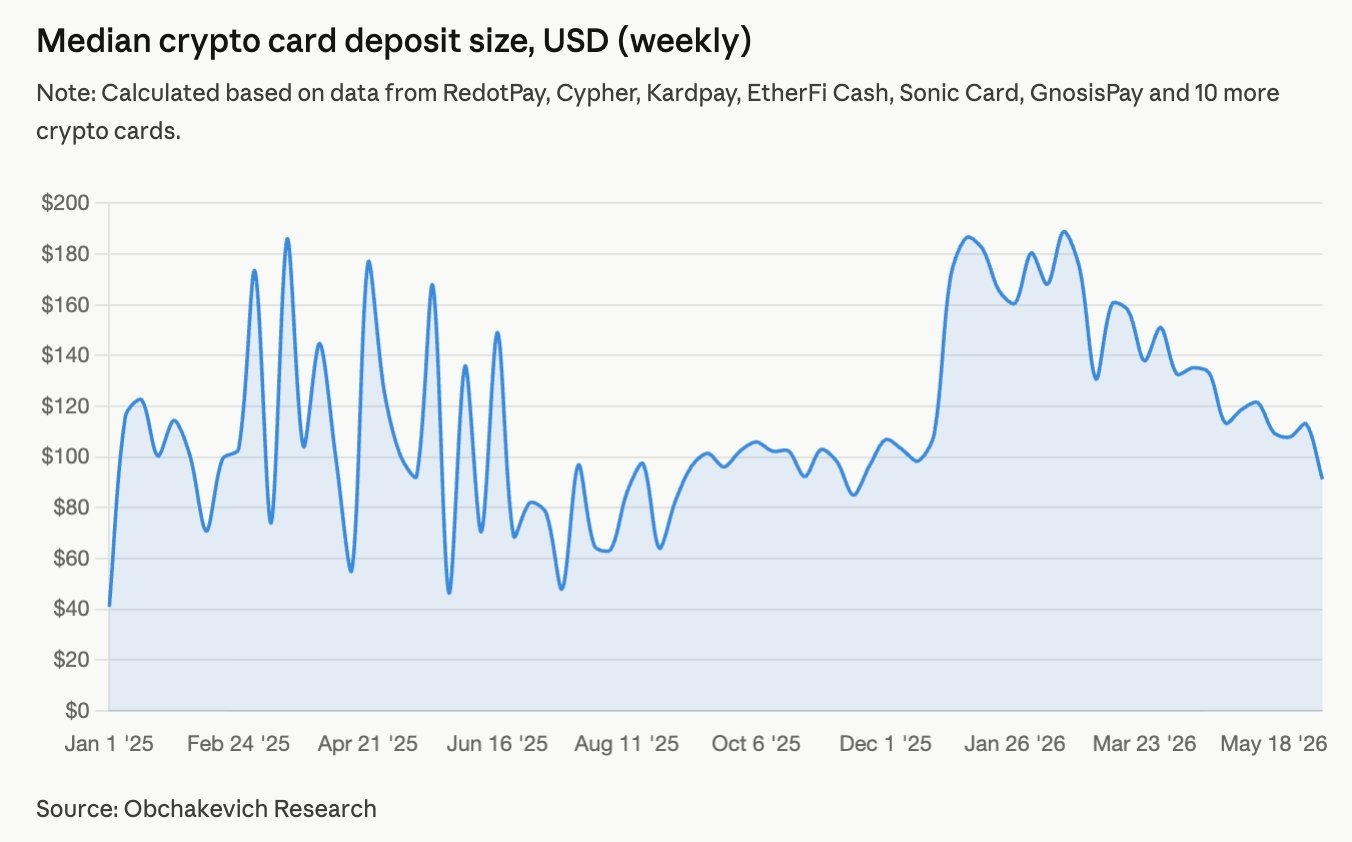
Stablecoins clearly dominate crypto payments, and user behavior increasingly mirrors everyday spending patterns. According to Obchakevich Research (analysis of 16 crypto cards), the median weekly crypto card deposit hovered mostly in the $60 - 110 range through 2025, jumped to $160 - 190 in early 2026, and then settled around $90- 120. These are everyday-wallet amounts: users top up their cards for regular spending - coffee, groceries, subscriptions - rather than parking large capital.
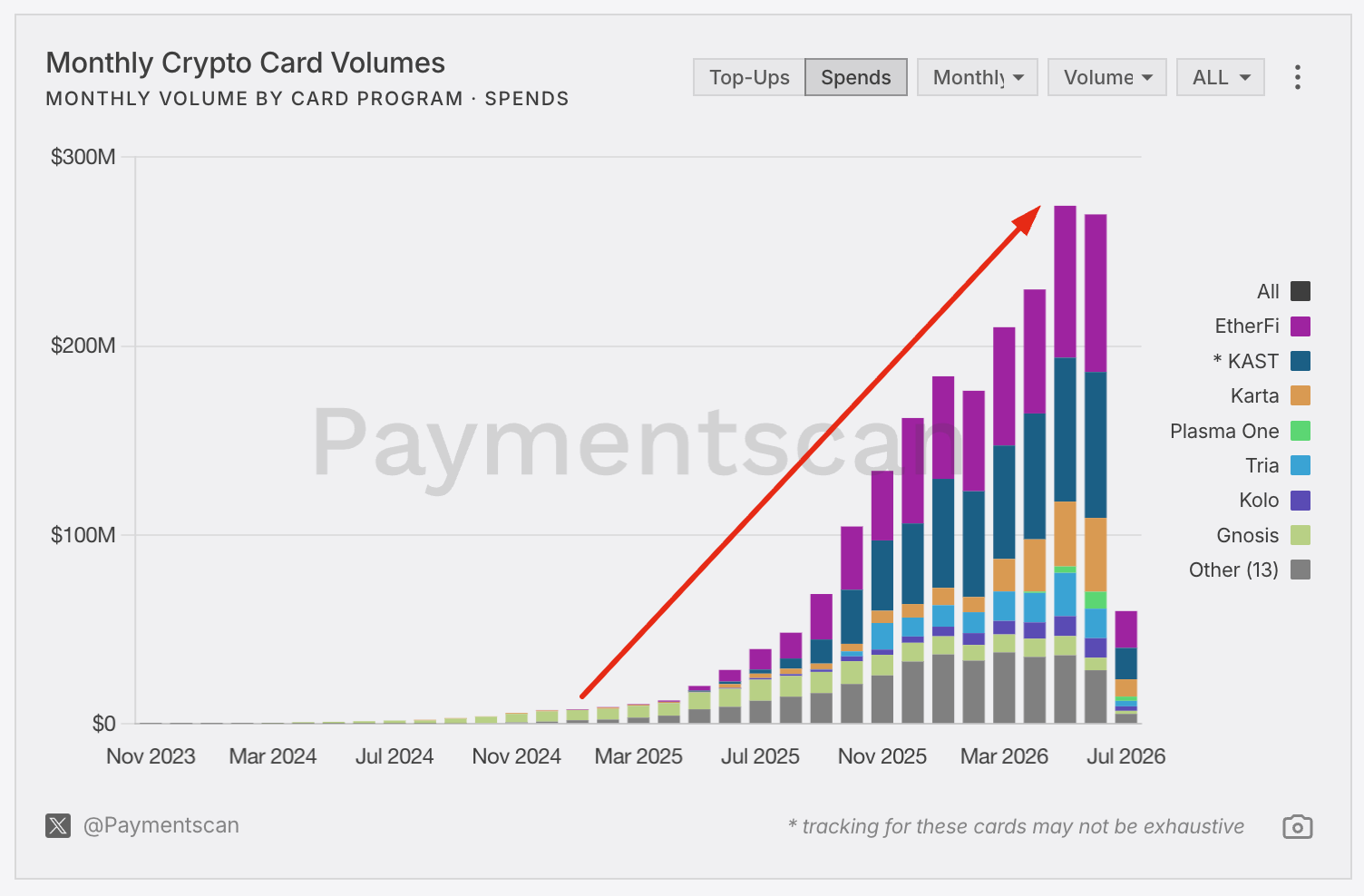
The main bridge between chain and checkout is the crypto card. According to PaymentScan, monthly crypto card spend - actual spending, not top-ups - grew from $7M in early 2025 to $275M in May 2026, a nearly 40x increase in under a year and a half. BVNK's research confirms the trend: 71% of stablecoin holders want to spend via a linked card.
The most telling insight: in every spending category, the desire to pay with crypto exceeds actual usage. 42% of users want to make major purchases with stablecoins, but only 28% do. The reason is friction - extra steps, network choices, fear of irreversible mistakes.
This is exactly the gap Oobit closes - going one step further than classic crypto cards. Every card requires prefunding: transferring funds to a custodial balance, picking a network, paying fees, waiting. That's precisely the friction that scares users away.
Oobit's DePay technology removes this step entirely: funds stay in the user's own self-custody wallet - MetaMask, Trust Wallet, Phantom, until the very second of payment authorization.
A smart contract executes a just-in-time transfer at the moment of purchase, gasless and with no balance preloading, while the merchant receives fiat through a standard Visa terminal.
In effect, the user's wallet itself becomes the payment instrument at 150M+ acceptance points worldwide. This is the final stage of consumption anatomy: when the last redundant step between crypto and checkout disappears, the intent–action gap closes on its own.
The anatomy is simple: the consumer is ready.
All that was missing was a convenient tool - and it's already in your pocket.





%202.svg)