Pay With Stablecoins.
Anywhere Oobit Works.

Pay with USDT, USDC and other supported stablecoins for everyday purchases, local QR payments and money transfers around the world.
USDT
USDC
DAI
EURR
PYUSD
USDP
FDUSD
USDG
USDR
XAUt
RLUSD
USD1
USDe
TUSD
USDD
USAT
GELT
USDP
FDUSD
XAUt
USDR
DAI
RLUSD
USDC
GELT
PYUSD
USDT
USAT
USDD
EURR
USDe
TUSD
USDG
USD1

Stablecoins, Made for Everyday Payments.

Stablecoins combine the stability of traditional currencies with the speed and global reach of digital assets.
Oobit takes them one step further.
Use your stablecoins to pay for everyday purchases, send money internationally, pay through supported local QR networks, or withdraw cash.

Why Stablecoins Matter

Stablecoins have become the backbone of digital finance, serving real-world needs:

Stablecoins vs Other Cryptocurrencies

Stablecoins
Bitcoin or Ethereum
High price stability
Low volatility
Suitable for payments /savings
Everyday utility

Global Stablecoin Market

The global stablecoin market has grown to more than 150 billion dollars in market capitalization in 2025, with billions of dollars in daily transactions taking place across blockchains. Adoption is especially strong in countries such as Brazil, Argentina, Nigeria, Turkey, and the Philippines, where stablecoins are increasingly used as a replacement for local currencies.

Beyond trading and payments, stablecoins are becoming a key driver of financial inclusion, giving the unbanked and underbanked population access to digital dollars for savings and everyday transactions.

Regulation of Stablecoins

Governments worldwide are actively shaping the future of stablecoins. In the European Union, the MiCA framework has introduced strict licensing requirements and mandatory reserve backing for issuers. In the United States, draft legislation is being prepared to regulate stablecoin issuance and ensure proper audits.

Across Latin America, adoption is outpacing regulation, with stablecoins already being used as everyday money. In Asia, approaches vary: countries like Singapore and the Philippines have embraced open adoption, while others such as China and India have imposed tighter restrictions.

Risks of Stablecoins

Even though they are designed to remain stable, stablecoins still carry risks. The most discussed concern is reserve transparency, with debates over whether issuers are always fully backed. Stablecoins may also experience temporary depegging during times of market stress.

Regulatory uncertainty adds another layer of risk, as rules differ significantly between regions and may change quickly. Finally, there are technology risks, including the potential for smart contract bugs or failures in the infrastructure that supports stablecoins.

Types of Stablecoins.

According to the Visa Onchain Analytics report on stablecoin transactions, the leading stablecoins by global usage include USDT, USDC, PYUSD, USDP, FDUSD, and USDG. In addition, Oobit also supports widely adopted stablecoins such as DAI and EURR, making it easier to spend both the global leaders and regional favorites.


How to Use Stablecoins
with Oobit

With Oobit, stablecoins become spendable money.
Download Oobit
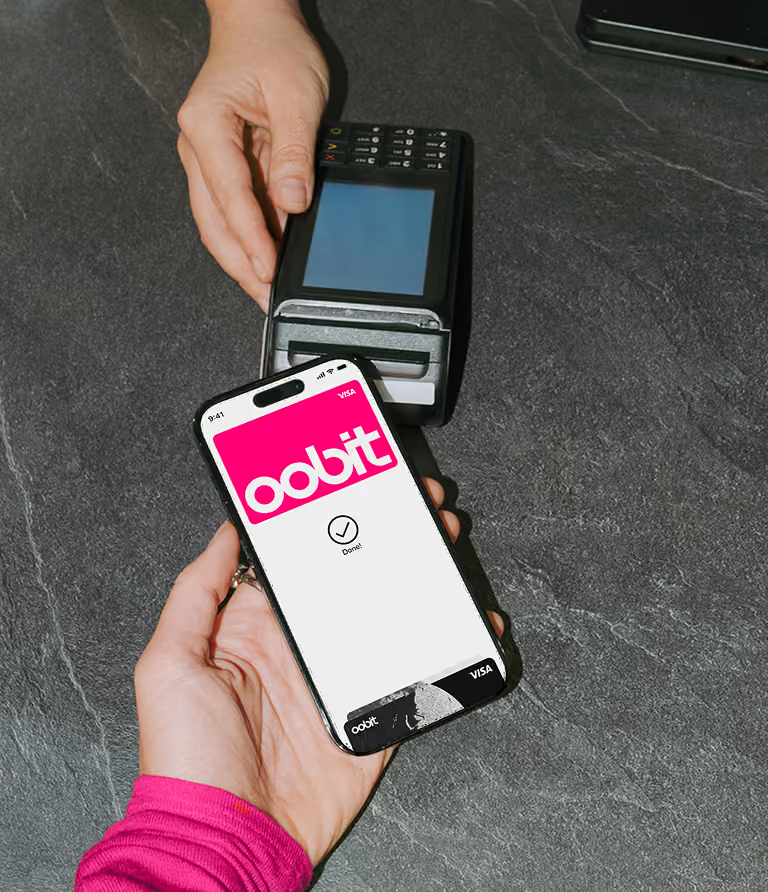
Tap and Pay
Available anywhere Visa is accepted.
Online checkout
Checkout with crypto across apps, shops, and services.

Send money
Transfer to friends and family with zero fees. (Wherever they are)

Questions?
Answers.

What are stablecoins?
What are the 4 types of stablecoins?
Is Bitcoin a stablecoin?
Who owns Tether USDT?
Can you make money with stablecoins?
Do stablecoins pay interest?
Can I buy stablecoins?
Is a stablecoin better than Bitcoin?
What is USDT?