Download oobit app to pay with crypto everywhere.

Scan the QR code to download the app





_2026-07-16_08-39-02%202%20(1).jpg)
The story is familiar to many. You order a crypto card, wait weeks for the plastic, go through verification yet again - only to discover the program doesn't operate in your country, conversion eats into your funds through spreads, and to pay at all, you need to keep a fiat balance topped up in advance.
These aren't isolated flaws of individual products.
They're consequences of the model itself. The numbers confirm the scale of the problem: only 10% of merchants worldwide accept cryptocurrency directly, and direct crypto payments account for just 0.19% of global transaction value. Building a crypto acceptance network from scratch is a dead end.
The classic crypto debit card isn't really a crypto product. It's a fiat card with a crypto facade: assets are sold in advance or at the moment of top-up, you're effectively spending fiat, and "crypto" survives only in the name.
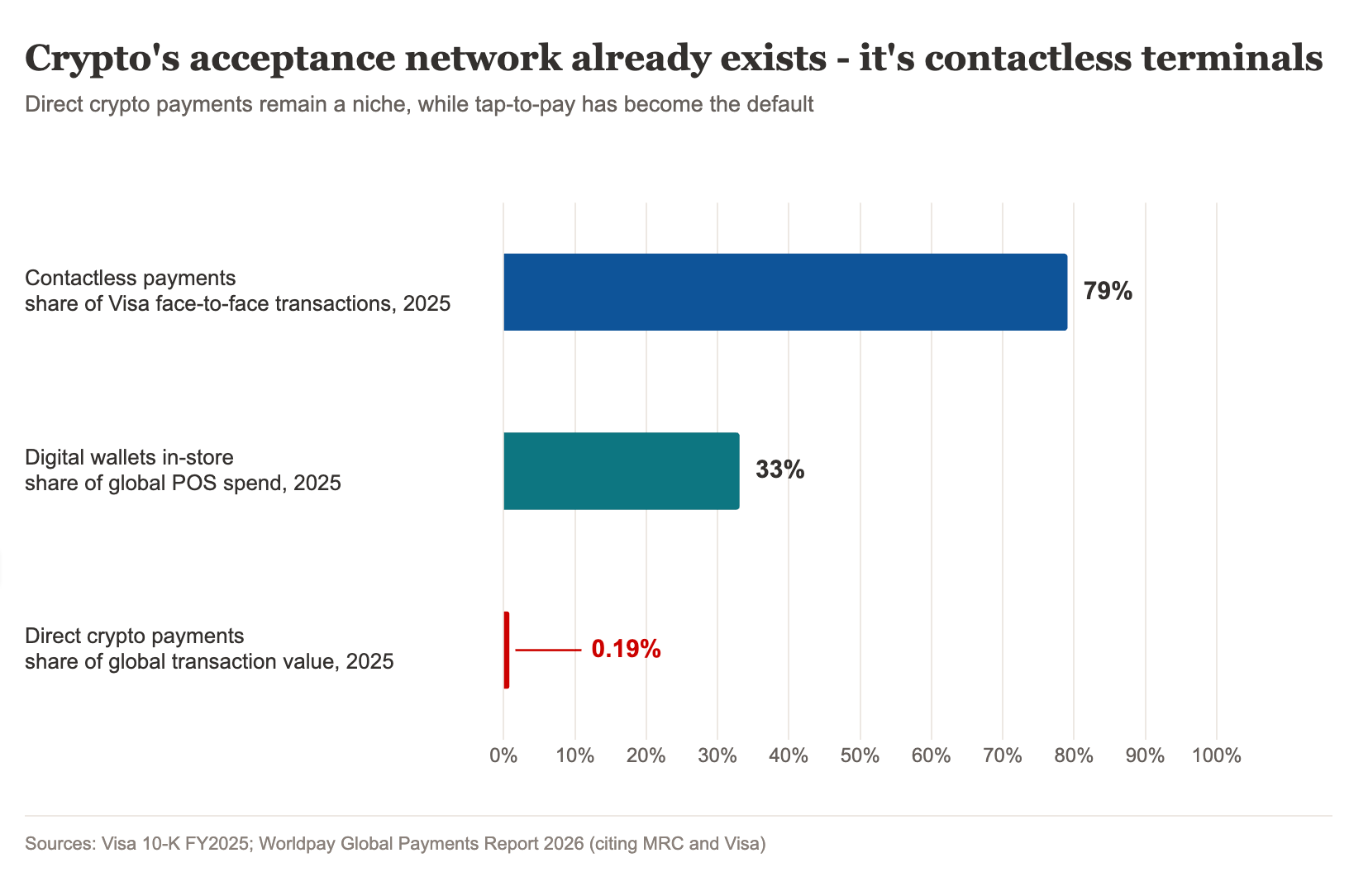
Oobit split the equation in two. What works, it kept: Tap & Pay is built on Visa rails, where 79% of all face-to-face transactions worldwide are already contactless. That's tens of millions of terminals - an acceptance infrastructure that doesn't need to be built, because it already exists. What doesn't work, it is removed: the plastic, the shipping wait, the fiat balances.
Your phone is the payment instrument - and that's already the norm, not futurism: payment apps are growing 135% faster than overall POS payments. You hold your phone to any contactless terminal and pay directly from your crypto balance. Conversion happens at the moment of payment: the merchant receives an ordinary Visa transaction, and you keep your assets in crypto until the very last second.
Oobit's own data shows this works as money, not speculation: transaction counts grew 2.7x with almost no correlation to the bitcoin price.
Paying with crypto should be as simple as paying with your phone. Now it's the same thing.








%202.svg)